Read Scripture like a novel
Every chapter of the Douay-Rheims, rewritten as immersive narrative prose that keeps the theology of the original — with the verbatim verses one tap away.
What Story Mode is
The Douay-Rheims is one of the most theologically careful English translations of Scripture ever made. It is also dense — late-Reformation prose, verse-by-verse numbering, and a vocabulary built for catechesis rather than story. For a lot of modern readers, opening to chapter one of Genesis feels less like the start of a story and more like the middle of a footnote.
Story Mode is a parallel rendering of every chapter, generated chapter-by-chapter and reviewed for fidelity. Names, places, numbers, and the sequence of events all match the underlying Douay-Rheims. What changes is shape: paragraphs replace verse breaks, the narrator tracks who’s speaking, sensory detail is restored where the original text already implies it. The aim is not to add anything — the aim is to remove the friction between the reader and what is already there.
Every chapter has a Verses / Story toggle in the header. One tap and you are back in the Douay-Rheims, exactly as printed. You read in whichever mode helps you keep moving, and switch when a passage matters enough to weigh word-for-word.
How it works
- 1
Open any chapter
Pick a book, pick a chapter. The reader opens with the original Douay-Rheims by default — verse numbers, traditional cadence, exactly as the printed editions show it.
- 2
Toggle to Story
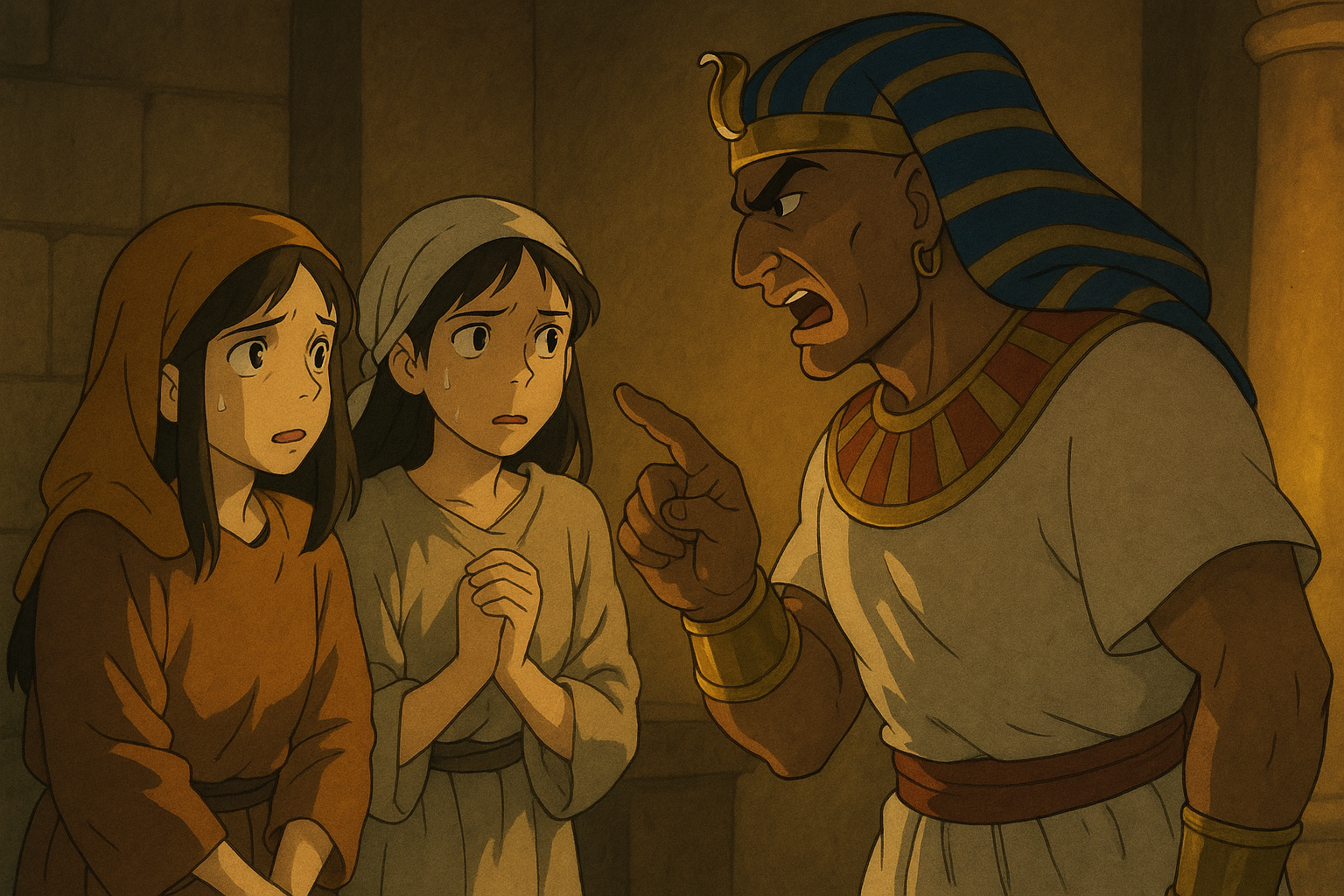
Tap Story at the top of the chapter and the page reflows into narrative paragraphs. The chapter art stays, the audio narration stays — only the prose changes.
- 3
Switch back any time
Tap Verses to land back on the original text in the same place. Your progress, bookmarks, and highlights are anchored to the verse — they travel between modes intact.
In practice
A side-by-side from the opening of Genesis.
1 In the beginning God created heaven, and earth.
2 And the earth was void and empty, and darkness was upon the face of the deep; and the spirit of God moved over the waters.
3 And God said: Be light made. And light was made.
4 And God saw the light that it was good; and he divided the light from the darkness.
5 And he called the light Day, and the darkness Night; and there was evening and morning one day.
In the beginning, before stars or seas, before the long line of years that would carry every human story, God created the heavens and the earth.
The earth lay formless, an empty deep wrapped in darkness — and over the face of those waters the Spirit of God moved, patient as a hand drawn across an unwritten page.
Then he spoke. “Let there be light.” And there was light — sudden, gentle, the first thing that anyone could ever have seen. God looked at it and called it good, and from then on light and darkness kept their places. He named the light Day and the darkness Night, and as evening folded into morning, the first day was finished.
Also try
Open Genesis 1 in Story Mode
Free to download, no account required. The Douay-Rheims is included offline.
Try Story Mode in Sacred Scrolls