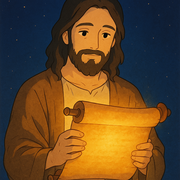
Isaiah
Isaiah is the longest of the prophets and the most often quoted in the New Testament.
About Isaiah
Isaiah is the longest of the prophets and the most often quoted in the New Testament. Saint Jerome called him “not so much a prophet as an evangelist” — so vivid are his foretellings of Christ's birth, ministry, passion, and triumph that the early Church read him almost as a fifth Gospel. The book bears the name of Isaiah son of Amos, who prophesied in Jerusalem during the reigns of Uzziah, Jotham, Ahaz, and Hezekiah (roughly 740–700 BC), through the Assyrian crises that nearly destroyed Judah.
The authorship of Isaiah is a question Catholic exegesis has long taken seriously. Tradition ascribes the entire book to the eighth-century prophet. Modern Catholic scholarship, since the Pontifical Biblical Commission's 1908 reply on Isaiah and the wider freedoms granted by Pius XII's Divino Afflante Spiritu (1943), generally distinguishes Isaiah of Jerusalem (chs. 1–39, the historical prophet) from later inspired authors writing in the Isaian tradition during the Babylonian exile (chs. 40–55) and the post-exilic restoration (chs. 56–66). The unity of voice and theology across the whole book is preserved by the prophetic school that gathered around the master.
The themes of Isaiah are vast: the holiness of the Lord (“Holy, holy, holy, the Lord God of hosts”, 6:3), the judgment that falls on Jerusalem and the nations, and the dazzling promise of restoration. At the heart of the book stand the four Servant Songs (42:1–9, 49:1–13, 50:4–11, 52:13–53:12) — the prophecies of a mysterious figure who will suffer for the sins of many. “He was wounded for our iniquities, he was bruised for our sins; the chastisement of our peace was upon him, and by his bruises we are healed” (53:5) is the most explicit Old Testament prophecy of the Passion.
Literarily, Isaiah falls into three movements. Chapters 1–39 deliver the eighth-century prophet's oracles of judgment against Judah, oracles against the nations, and the great Immanuel prophecies (“A virgin shall conceive and bear a son, and his name shall be called Emmanuel”, 7:14). Chapters 40–55, the “Book of Consolation,” speak to the exiles in Babylon: “Be comforted, be comforted, my people” (40:1). Chapters 56–66 address the returned community in Jerusalem with promises of new heavens and a new earth.
Isaiah saturates Catholic liturgy. The Advent and Christmas readings draw heavily from him — the Immanuel prophecy, the Prince of Peace (9:6), the wolf dwelling with the lamb (11:6). The Suffering Servant of chapter 53 is read on Good Friday. The vision of the heavenly liturgy in chapter 6 is the source of the Sanctus we sing at every Mass. The Catechism treats Isaiah as the prophetic foundation for the Church's teaching on Christ as Messiah, Servant, and Prince of Peace. To read Isaiah is to learn how Israel's hope took the precise shape that, centuries later, Christ would step forward to fulfill.
Key verse
“But he was wounded for our iniquities, he was bruised for our sins: the chastisement of our peace was upon him, and by his bruises we are healed.”
— Isaiah 53:5
Notable chapters in Isaiah
- Isaiah 6
Isaiah’s call and the seraphim
“Holy, holy, holy, the Lord God of hosts” — the vision that gives the Church the Sanctus. Isaiah’s lips are touched with a burning coal and he is sent.
- Isaiah 7
The Immanuel prophecy
“Behold a virgin shall conceive, and bear a son, and his name shall be called Emmanuel” — the heart of the Advent liturgy.
- Isaiah 9
A child is born to us
“His name shall be called Wonderful, Counsellor, God the Mighty, the Father of the world to come, the Prince of Peace” — read at the Mass of Christmas night.
- Isaiah 11
The shoot from the root of Jesse
The seven gifts of the Holy Spirit (the Vulgate adds “piety” to “the fear of the Lord”) flow from this passage. The wolf dwells with the lamb.
- Isaiah 40
A voice crying in the wilderness
“Be comforted, be comforted, my people” — the prophecy John the Baptist quotes of himself. The Book of Consolation begins.
- Isaiah 42
Behold my servant
The first Servant Song. “The bruised reed he shall not break” — read in Holy Week as the prophecy of the gentleness of Christ.
- Isaiah 53
The Suffering Servant
“By his bruises we are healed.” The fourth Servant Song — the most explicit prophecy of the Passion in the Old Testament.
- Isaiah 61
The Spirit of the Lord is upon me
The text Christ reads in the synagogue of Nazareth (Luke 4) and applies to himself: “This day is fulfilled this scripture in your ears.”
Read Isaiah the way it was meant to be read.
Story Mode, illuminated chapter art, and audio narration in seven languages — free on iOS.
Read Isaiah in Sacred Scrolls