John
The Gospel of John is the most theologically profound book of the New Testament — Saint Augustine called it the spiritual Gospel, soaring above the synoptics like an eagle over the ground.
About John
The Gospel of John is the most theologically profound book of the New Testament — Saint Augustine called it the spiritual Gospel, soaring above the synoptics like an eagle over the ground. It opens not with genealogy or annunciation but with eternity: “In the beginning was the Word, and the Word was with God, and the Word was God” (1:1). From its first verse to its last, John presents Christ as the eternal Logos, the divine Son who has come from the Father to give us a share in his own life.
From Saint Irenaeus (ca. AD 180) onward, the unbroken patristic tradition identifies the author as the apostle John, son of Zebedee — “the disciple whom Jesus loved” — who in his old age in Ephesus wrote the fourth Gospel at the request of his disciples. Saint Polycarp of Smyrna, Irenaeus's teacher, knew John personally; the chain of testimony is unusually short. The Pontifical Biblical Commission's 1907 reply on the fourth Gospel reaffirmed Johannine authorship and the historical reliability of the book. Most Catholic scholars place the composition near the end of the first century, around AD 90 to 100.
The themes of John are stunning: the Logos (1:1–18), light and darkness, life and death, water and bread, the Father and the Son, love and the laying down of life. John structures his Gospel around seven “signs” — miracles weighted with symbolic meaning — and seven great I AM sayings: “I am the bread of life” (6:35), “the light of the world” (8:12), “the door” (10:9), “the good shepherd” (10:11), “the resurrection and the life” (11:25), “the way, and the truth, and the life” (14:6), and “the true vine” (15:1). Each picks up the divine name revealed at the burning bush — Ego eimi, I AM — and applies it to Christ.
Literarily, John is divided into the Book of Signs (chs. 1–12), in which Christ progressively reveals himself through miracles to the world, and the Book of Glory (chs. 13–21), in which he is glorified through the cross, resurrection, and gift of the Holy Spirit. The Last Supper Discourse (chs. 13–17) is unique to John — five chapters of intimate instruction, including the washing of the feet, the new commandment to love, the promise of the Paraclete, and the great High Priestly Prayer (“Father, the hour is come; glorify thy Son”).
In Catholic life, John is the Gospel read on Christmas morning (the Prologue), at the Easter Vigil, on Easter Sunday morning, on Pentecost, on Good Friday (the Passion), and through the Sundays of Easter every year. The discourse on the Bread of Life (ch. 6) is the foundational New Testament text on the Real Presence and is cited some twenty times in the Catechism. The handing over of his mother to John from the cross (“Behold thy mother”, 19:27) is the basis of Marian devotion and Catholic doctrine on the spiritual motherhood of Mary. To read John is to be brought, by stages, into the heart of Christian contemplation — to come, in the words of the closing verse, “that believing, you may have life in his name” (20:31).
Key verse
“For God so loved the world, as to give his only begotten Son; that whosoever believeth in him, may not perish, but may have life everlasting.”
— John 3:16
Notable chapters in John
- John 1
The Prologue — the Word made flesh
“In the beginning was the Word… and the Word was made flesh, and dwelt among us.” Read at every Christmas morning Mass.
- John 3
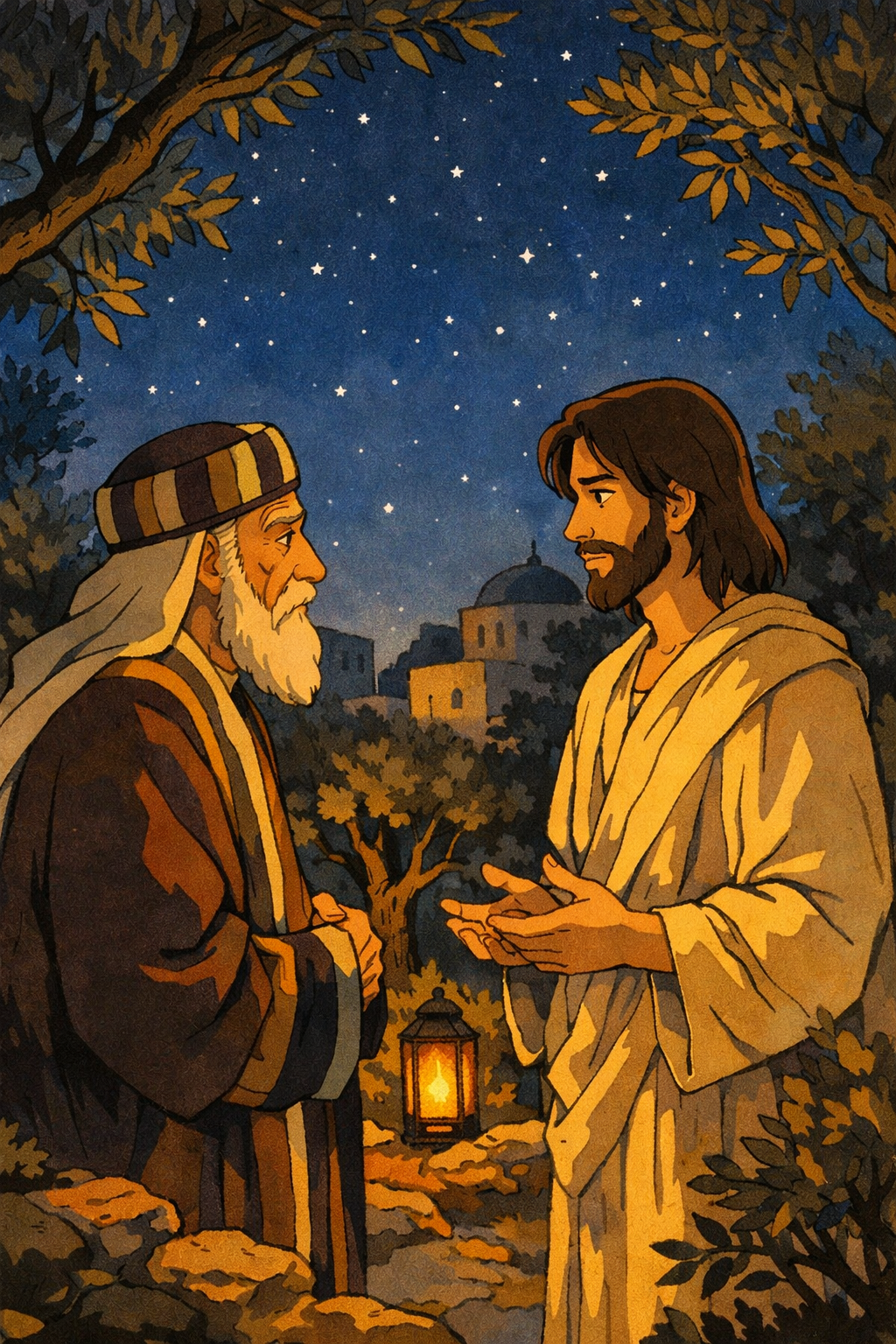
Nicodemus and being born again
“God so loved the world… that whosoever believeth in him, may not perish, but may have life everlasting.”
- John 6
The Bread of Life discourse
“Except you eat the flesh of the Son of man, and drink his blood, you shall not have life in you.” The Eucharistic foundation.
- John 10
The Good Shepherd
“I am the good shepherd. The good shepherd giveth his life for his sheep.” Christ’s self-portrait as the One Pastor.
- John 11
The raising of Lazarus
“I am the resurrection and the life.” Christ weeps at the tomb of his friend, then calls him forth.
- John 13
The washing of the feet
“If I then being your Lord and Master, have washed your feet… you also ought to wash one another’s feet.” Holy Thursday’s Gospel.
- John 17
The High Priestly Prayer
“That they all may be one, as thou, Father, in me, and I in thee.” Christ’s great prayer for unity on the night of his passion.
- John 19
The Crucifixion and “Behold thy mother”
“Woman, behold thy son” — “Behold thy mother.” Mary is given to John, and through John to the Church.
Read John the way it was meant to be read.
Story Mode, illuminated chapter art, and audio narration in seven languages — free on iOS.
Read John in Sacred Scrolls