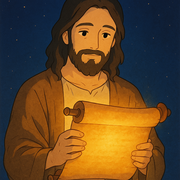
Luke
Luke is the longest book of the New Testament and, in Dante's phrase, the “scribe of the gentleness of Christ” — scriba mansuetudinis Christi.
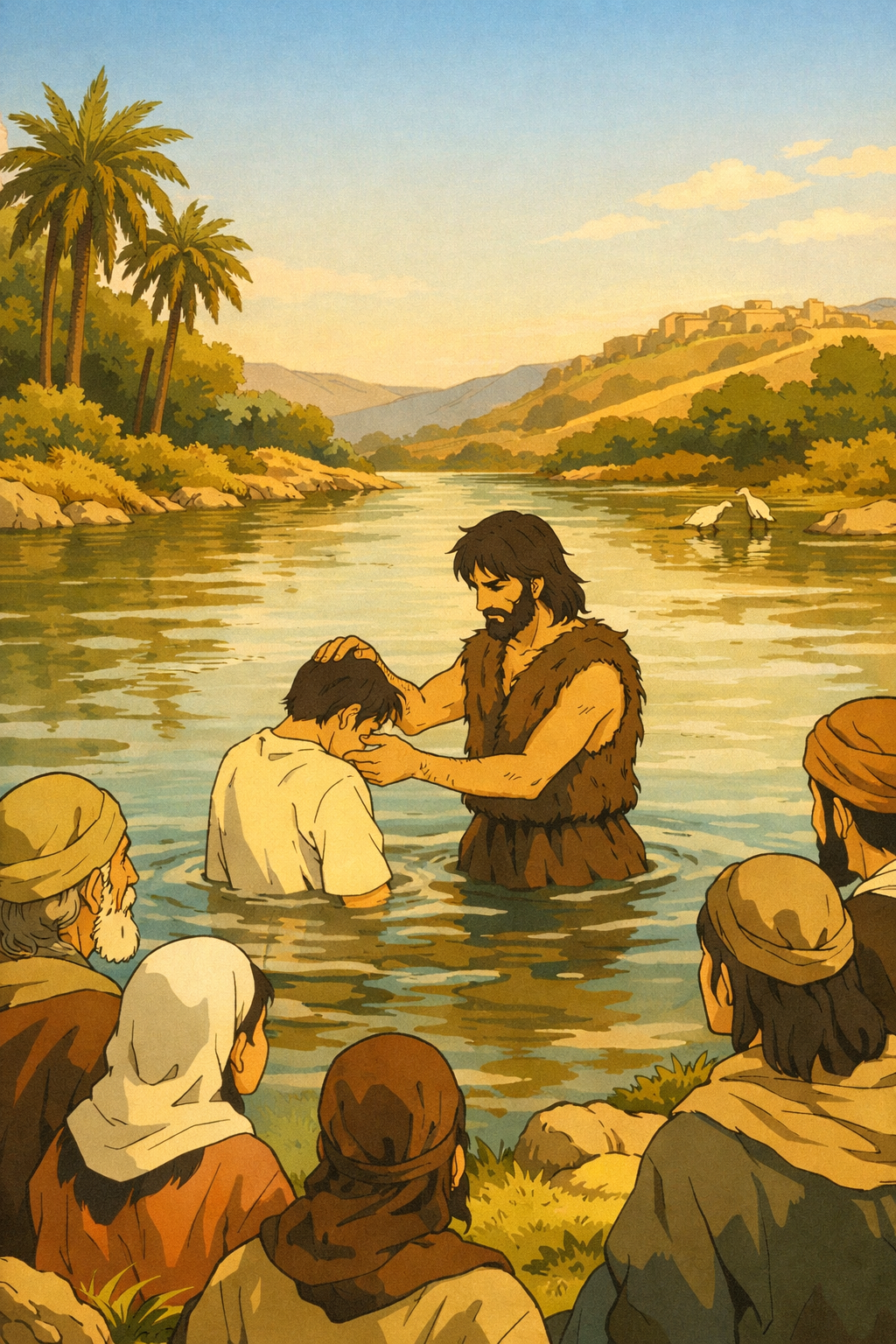
About Luke
Luke is the longest book of the New Testament and, in Dante's phrase, the “scribe of the gentleness of Christ” — scriba mansuetudinis Christi. Where Matthew's Gospel is most explicitly Jewish and Mark's is most starkly active, Luke's is most universal, most attentive to the poor and the outcast, most filled with women and children, most saturated with prayer and the Holy Spirit. It is the only Gospel written by a Gentile, and the only Gospel that opens onto a sequel — the Acts of the Apostles, which Luke also wrote.
From the earliest patristic witness — the Anti-Marcionite Prologue (ca. AD 170), Saint Irenaeus, Tertullian, and Origen — the author has been identified as Saint Luke, “the most dear physician” Saint Paul greets in Colossians 4:14 and the loyal companion who was with Paul in his Roman imprisonment (2 Tim. 4:11). The book is dedicated to a certain Theophilus, possibly a Gentile patron, and includes “we-passages” in Acts that mark the author as Paul's eyewitness traveling companion. Catholic scholarship places the composition between AD 60 and 80, with Acts following shortly after.
The themes of Luke are mercy, the Holy Spirit, prayer, and the universal scope of salvation. Luke alone preserves the parables of the Good Samaritan (10:25–37) and the Prodigal Son (15:11–32) — the two most beloved windows into divine mercy in all of Scripture. Luke alone records the song of the angels at Bethlehem (“Glory to God in the highest”, 2:14), the canticle of Mary (the Magnificat, 1:46–55), the canticle of Zachary (the Benedictus, 1:67–79), and the canticle of Simeon (the Nunc Dimittis, 2:29–32) — the four New Testament canticles that the Church prays daily in the Liturgy of the Hours.
Luke is also the Gospel of the Mother of God. He devotes the entire first two chapters to the infancy narratives — the annunciation, the visitation, the birth at Bethlehem, the presentation, the finding in the temple — and writes, twice, that “Mary kept all these things, pondering them in her heart” (2:19, 2:51). Catholic tradition since the second century has held that Luke received this material from Mary herself; he is, in Dante's image, “the painter of the Virgin.” Saint Pope John Paul II called the first two chapters of Luke the cradle of Marian doctrine.
In Catholic life, Luke is the Gospel of Year C in the Sunday lectionary. His infancy narratives shape the Christmas, Annunciation, Visitation, and Presentation feasts. The Magnificat is sung at every Vespers; the Benedictus at every Lauds; the Nunc Dimittis at every Compline. The Hail Mary's first half is taken directly from Luke (1:28, 1:42). The Catechism cites Luke more than two hundred times — on Mary (CCC 484–511), the parables of mercy (CCC 1465, 2839), the Holy Spirit (CCC 695), and the Magnificat (CCC 2619). Whoever would learn the gentleness of Christ, the Fathers said, must read Luke.
Key verse
“My soul doth magnify the Lord. And my spirit hath rejoiced in God my Saviour. Because he hath regarded the humility of his handmaid; for behold from henceforth all generations shall call me blessed. Because he that is mighty, hath done great things to me; and holy is his name.”
— Luke 1:46-49
Notable chapters in Luke
- Luke 1
The Annunciation, the Visitation, the Magnificat
The angel Gabriel comes to Mary at Nazareth; she greets Elizabeth; she sings: “My soul doth magnify the Lord.”
- Luke 2
The birth at Bethlehem
The shepherds, the angels, the manger, Simeon and Anna in the Temple. “And Mary kept all these words, pondering them in her heart.”
- Luke 4
Christ in the synagogue at Nazareth
Christ reads from Isaiah 61 and applies it to himself: “This day is fulfilled this scripture in your ears.” The first sermon.
- Luke 10
The Good Samaritan
“Who is my neighbour?” The parable Christians have not stopped quoting for two millennia — and the visit to Martha and Mary follows.
- Luke 15
The lost sheep, lost coin, prodigal son
Three parables of mercy in a single chapter. “This my son was dead, and is come to life again; was lost, and is found.”
- Luke 22
The Last Supper and the agony in the garden
“Do this for a commemoration of me.” Christ institutes the Eucharist; Peter’s denial is foretold; the angel strengthens him in Gethsemane.
- Luke 23
The Crucifixion and the Good Thief
“Father, forgive them, for they know not what they do” — and to the thief: “This day thou shalt be with me in paradise.”
- Luke 24
The road to Emmaus
Two disciples meet the risen Christ on the road; “their eyes were opened, and they knew him in the breaking of bread.”
Read Luke the way it was meant to be read.
Story Mode, illuminated chapter art, and audio narration in seven languages — free on iOS.
Read Luke in Sacred Scrolls