Romans
Paul's Letter to the Romans is the longest, the most theologically systematic, and the most influential of his epistles — Saint Augustine called it the door to the New Testament, and Saint Thomas Aquinas the seedbed of all Christian doctrine.
About Romans
Paul's Letter to the Romans is the longest, the most theologically systematic, and the most influential of his epistles — Saint Augustine called it the door to the New Testament, and Saint Thomas Aquinas the seedbed of all Christian doctrine. Written from Corinth in the winter of AD 57, on the eve of Paul's final journey to Jerusalem, the letter introduces the apostle and his Gospel to a Christian community he has not yet visited but hopes shortly to see, on the way to a new mission in Spain.
The Pauline authorship of Romans has never been seriously questioned, in either ancient or modern times. The opening salutation identifies the author as Paul (1:1); the autobiographical passages match what we know from Acts and the other epistles; the closing chapter even names the secretary, Tertius, who took down the letter (16:22). The Pontifical Biblical Commission's 1907 reply on Pauline authorship affirmed all thirteen letters traditionally bearing Paul's name as authentically his.
The themes of Romans are the most fundamental in all of Christian theology: the universal reach of human sin, the universal scope of divine grace, justification by faith working through love, the new life of the baptized, the role of Israel in salvation history, and the moral vocation of the Christian. The letter unfolds in a single sustained argument from chapter 1 to chapter 11, then turns in chapter 12 to the practical consequences for Christian life. The thesis statement is given at the outset: “For I am not ashamed of the gospel. For it is the power of God unto salvation to every one that believeth” (1:16).
Literarily, Romans is unlike any other Pauline letter — less occasional, more architectural. Paul builds his case in stages: all have sinned, Jew and Gentile alike (1:18–3:20); Christ's atoning death has made righteousness available by faith to all (3:21–5:21); baptism unites the believer to Christ's death and resurrection, breaking the dominion of sin (chs. 6–8); God has not abandoned his promises to Israel (chs. 9–11); therefore the Christian must offer his body “a living sacrifice, holy, pleasing unto God” (12:1) and live in love toward neighbor and submission to civil authority. The letter ends in a magnificent doxology that reads like a final “Amen” over the entire Pauline gospel (16:25–27).
In Catholic life, Romans has shaped the Church's teaching on grace, original sin, justification, baptism, and predestination at every level. The Council of Trent's Decree on Justification (1547) is essentially a careful reading of Romans against the misreadings of the Reformers. The Catechism cites Romans more than three hundred times — on the natural knowledge of God (CCC 32), on original sin (CCC 402–406), on baptism into Christ's death (CCC 1006–1014), on the Spirit who cries Abba (CCC 2766), and on the love of God from which nothing can separate us (CCC 1011). The Easter Vigil's epistle is Romans 6 — the great proclamation that the baptized are dead to sin and alive to God in Christ Jesus our Lord.
Key verse
“For I am sure that neither death, nor life, nor angels, nor principalities, nor powers, nor things present, nor things to come, nor might, nor height, nor depth, nor any other creature, shall be able to separate us from the love of God, which is in Christ Jesus our Lord.”
— Romans 8:38-39
Notable chapters in Romans
- Romans 1
Paul’s thesis and the natural knowledge of God
“The just man liveth by faith.” “For the invisible things of him… are clearly seen, being understood by the things that are made.”
- Romans 3
All have sinned and need God’s grace
“There is no distinction. For all have sinned, and do need the glory of God. Being justified freely by his grace.”
- Romans 5
Adam and Christ; peace through justification
“Therefore being justified by faith, let us have peace with God.” Adam’s disobedience answered by Christ’s obedience.
- Romans 6
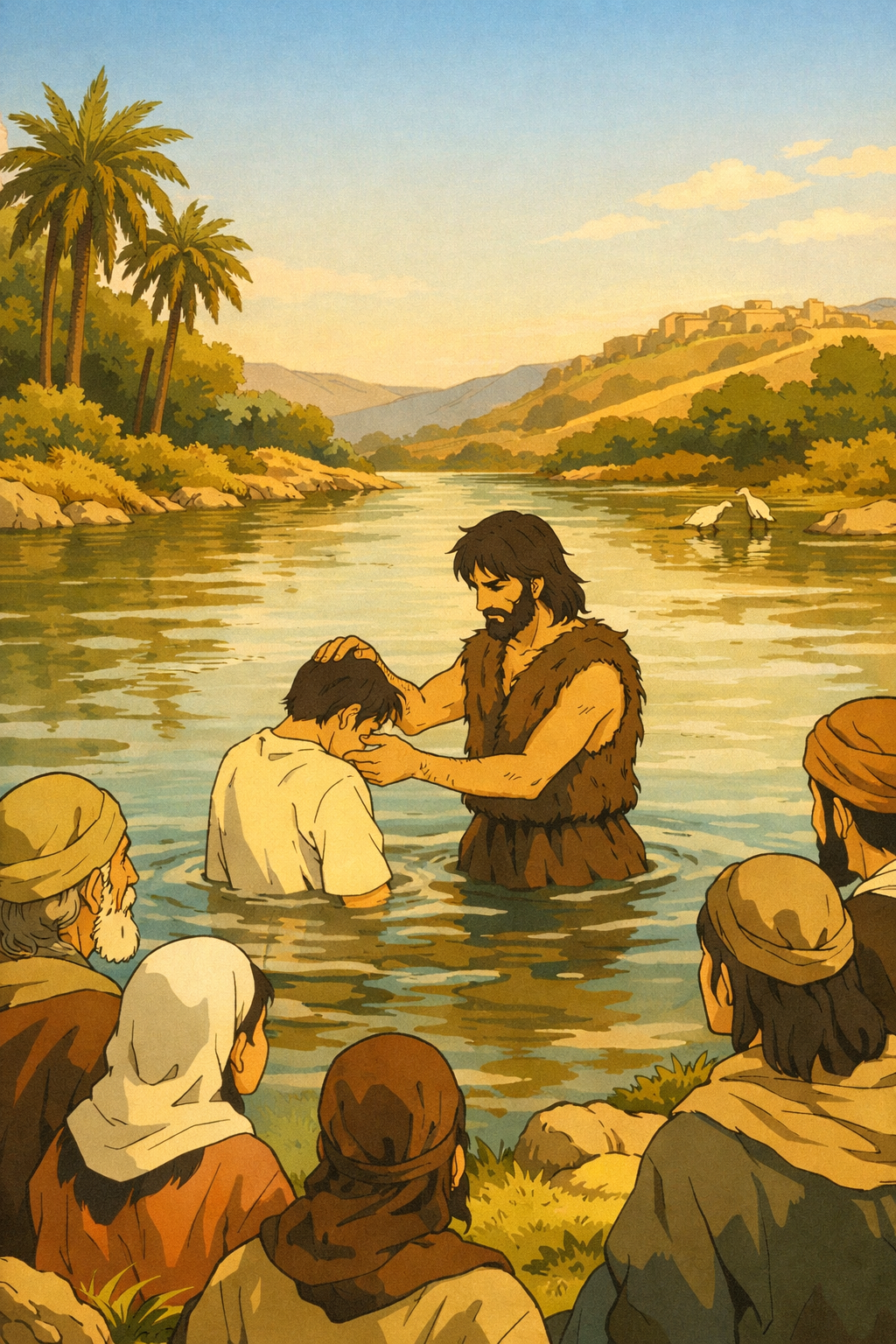
Baptized into the death of Christ
“We are buried together with him by baptism into death.” The Easter Vigil epistle. The basis of all Catholic baptismal theology.
- Romans 8
The Spirit, the children of God, and inseparable love
“Who then shall separate us from the love of Christ?” “Neither death, nor life, nor angels…” The grand crescendo of the letter.
- Romans 9
God’s sovereign mercy
“Whom he hath called, them he hath also justified. And whom he hath justified, them he hath also glorified.”
- Romans 11
The mystery of Israel
“For the gifts and the calling of God are without repentance.” Paul’s assurance that God has not rejected his people.
- Romans 12
Living sacrifice and the law of love
“Present your bodies a living sacrifice, holy, pleasing unto God” — “your reasonable service.” The pivot from doctrine to life.
Read Romans the way it was meant to be read.
Story Mode, illuminated chapter art, and audio narration in seven languages — free on iOS.
Read Romans in Sacred Scrolls